Entries by admin_detist_sam

,

Emergency Blog


Emergency Dental Guide

Dental Emergency?
We Have Answers.

From knocked-out teeth to severe toothaches — get immediate expert guidance from the team at Newbury Smiles Dentistry. Browse every dental emergency below or jump straight to your situation.

24+
Emergency Situations Covered
Same Day
Emergency Exams
10+ Yrs
Serving Newbury Park


Jump to Your Emergency

Select the situation that matches yours for immediate guidance.

When to Go to the ER Instead: Go immediately if you have difficulty breathing or swallowing, swelling spreading to your neck or eye, a dislocated or broken jaw, or severe uncontrollable bleeding.

Knocked-Out Tooth (Avulsion)

Time is absolutely critical act within 30–60 minutes for the best chance of saving the tooth.

Act fast — every minute counts. Follow these steps:

  1. Pick up the tooth by the crown (white part), never the root.
  2. If dirty, gently rinse with water for 10 seconds. Do NOT scrub or use soap.
  3. Try to reinsert it into the socket and bite down gently on a gauze.
  4. If reinsertion isn’t possible, store it in milk, saline, or between your cheek and gum.
  5. Call Newbury Smiles immediately and get to us within 30 minutes.
The tooth has the highest chance of survival if replanted within 30 minutes. After 60 minutes, success rates drop significantly.

Yes — a knocked-out permanent tooth can often be successfully reimplanted, especially when handled correctly and promptly. The key factors are: how quickly the tooth is replanted, how the tooth was stored, and the overall health of the root.

Baby teeth (primary teeth) are generally not reimplanted because it can interfere with developing permanent teeth. Call us, and we’ll advise based on your child’s age.

Keep the tooth moist at all times. Store it in milk (best home option), saline solution, or a “Save-A-Tooth” emergency kit. Avoid tap water as it can damage root cells.

Head to your nearest emergency dental clinic or ER if we are unavailable. Even if more than an hour has passed, bring the tooth; it may still help determine your treatment options.

Broken or Cracked Tooth

From hairline cracks to major fractures, the right response depends on severity.

It depends on the severity:

  • Minor chip (no pain): Not urgent, but call us within 24–48 hours to prevent further damage.
  • Large break with pain: Call us same day — the pulp (nerve) may be exposed.
  • Tooth broken at the gum line: Dental emergency — call immediately.
  • Vertical crack: Can be serious — call us today.
Save any broken pieces in milk or water. They may be usable for repair.

Absolutely. A crack that doesn’t hurt today can worsen under chewing pressure and become extremely painful,  or even cause the tooth to split, if left untreated. Cracks can also allow bacteria to enter, leading to infection.

Schedule an appointment within 1–2 days. We’ll assess the crack depth and determine if bonding, a crown, or another treatment is needed.

  • Rinse with warm salt water to clean the area.
  • Apply gauze if there is bleeding.
  • Use a cold pack on your cheek for swelling.
  • Cover sharp edges with dental wax (available at pharmacies) to protect your tongue and cheek.
  • Take OTC pain relievers (ibuprofen or acetaminophen) as directed — do not place aspirin directly on the tooth or gum.
  • Avoid chewing on that side and avoid very hot, cold, or sweet foods.

Severe Toothache

Intense tooth pain is a signal that something needs attention — don’t wait it out.

A toothache becomes a dental emergency when:

  • The pain is severe, throbbing, or constant
  • Pain is accompanied by fever, swelling, or a bad taste/smell
  • You have difficulty opening your mouth or swallowing
  • Pain started after dental work and is getting worse
  • OTC pain medication provides little to no relief
Toothache + fever + facial swelling = possible abscess. This can be life-threatening if untreated. Call us immediately or go to the ER.

  • Salt water rinse: Mix ½ tsp salt in 8 oz warm water and swish for 30 seconds.
  • Clove oil: Apply a tiny amount with a cotton ball — it contains eugenol, a natural anesthetic.
  • Cold pack: Apply to your cheek for 15–20 minutes on/off to numb and reduce swelling.
  • OTC pain relievers: Ibuprofen or acetaminophen as directed. Ibuprofen is often more effective as it also reduces inflammation.
  • Elevate your head: Keep your head elevated when lying down to reduce throbbing.

These are temporary measures only. Please call us — untreated tooth pain rarely resolves on its own.

Yes. Tooth-like pain can sometimes originate from:

  • Sinus infections (especially upper back teeth)
  • TMJ (jaw joint) disorders
  • Gum disease
  • Referred pain from the ear or neck
  • Impacted wisdom teeth

That’s why a professional examination is essential. We can diagnose the source and make sure you’re treated correctly.

Lost Filling or Crown

A missing restoration leaves your tooth vulnerable — here’s how to handle it.

A lost filling is not usually a severe emergency, but call us within 24 hours. The exposed tooth can become very sensitive and is at risk of further decay or fracture.

In the meantime, you can use dental cement (brands like Dentemp, available at pharmacies) to temporarily fill the cavity. Avoid chewing on that side and avoid extreme temperatures.

You can temporarily re-seat a crown using dental cement from the pharmacy. Clean the crown and the tooth, dry them, apply the cement inside the crown, and gently press it back into place. Do not use super glue — it is toxic and can damage the tooth and crown.

Call us immediately to schedule a permanent recementation.

If the crown feels uncomfortable or doesn’t seat fully, remove it and store it safely to avoid swallowing it.

Dental Abscess

A bacterial infection that can become dangerous quickly. This is always a dental emergency.

A dental abscess is a pocket of pus caused by a bacterial infection. Signs include:

  • Severe, persistent, throbbing toothache
  • Sensitivity to hot and cold
  • Fever and a general feeling of illness
  • Swelling in your face, cheek, or neck
  • Tender, swollen lymph nodes under your jaw
  • A pimple-like bump on the gums near the painful tooth
  • Bad taste or smell from a burst abscess
If you have facial swelling, difficulty breathing or swallowing, or high fever — go to the ER immediately. A dental abscess can spread to the jaw, neck, and brain if untreated.

No, a dental abscess cannot be fully treated at home and should never be ignored. Antibiotics can help control the infection temporarily, but the source must be treated professionally through root canal therapy, drainage, or extraction.

For temporary relief only: rinse with warm salt water several times a day and take OTC pain relievers. Call us immediately.

Bleeding Gums or Mouth

Some bleeding is common; persistent or heavy bleeding needs attention.

Occasional light bleeding with brushing is often a sign of gingivitis (early gum disease) and is not an emergency — but it is a warning sign you should not ignore. Schedule an appointment within the next 1–2 weeks.

Use a soft-bristle brush, brush gently at a 45-degree angle to the gumline, and floss daily. Gums can often recover with improved home care.

  1. Apply firm pressure with clean gauze for 15–20 minutes without lifting to check.
  2. Do not rinse, spit, or drink anything during this time.
  3. Sit upright or lean slightly forward; do not lay flat.
  4. Apply a cold pack to the outside of your face.

If bleeding does not slow after 20–30 minutes, call us or go to the ER.

Broken Braces or Protruding Wire

Orthodontic emergencies are uncomfortable but rarely dangerous if managed correctly.

  • Use the eraser end of a pencil to gently push the wire flat against the tooth.
  • Cover the sharp end with orthodontic wax to protect the inside of your cheek.
  • As a last resort, carefully clip the wire with small nail clippers sterilized with alcohol — only the protruding end.
  • Call your orthodontist or us to schedule a repair soon.
Do not attempt to remove wires that are attached to brackets — you may cause further damage.

A loose bracket is uncomfortable but generally not a true emergency unless it’s causing pain or injury. Secure it with orthodontic wax and contact your orthodontist within 1–2 days to have it rebonded.

If the bracket is completely off, save it and bring it to your appointment. Do not attempt to glue it back yourself.

Soft Tissue Injuries

Injuries to the lips, tongue, cheeks, and gums from biting, impact, or trauma.

  1. Rinse your mouth gently with warm salt water.
  2. Apply pressure with clean gauze for 15–20 minutes.
  3. Apply a cold compress to the outside of the face to reduce swelling.
  4. If bleeding is severe or the wound is large, go to the ER.

Most minor soft tissue injuries heal on their own within 1–2 weeks. Avoid spicy or acidic foods during healing.

Canker sores are common and not an emergency. They typically heal within 1–2 weeks. OTC gels like Orabase or Anbesol can provide temporary relief.

Call us if the sore is unusually large, lasts more than 2 weeks, is accompanied by fever, or makes swallowing difficult.

A sore that doesn’t heal within 3 weeks should always be evaluated to rule out more serious conditions.

Jaw Pain or Locked Jaw

TMJ issues, trauma, or muscle spasm can all cause jaw problems requiring prompt care.

A locked jaw can be very alarming. Do not try to force your jaw open.

  • Apply warm, moist heat to the jaw muscles to reduce tension.
  • Take OTC anti-inflammatories (ibuprofen) if you can swallow them.
  • Eat soft foods only and avoid wide mouth opening.
  • Call us right away; in many cases, this can be treated in our office.

If the jaw was dislocated due to trauma, go to the ER.

TMJ (temporomandibular joint) disorder is very common. Signs include:

  • Clicking, popping, or grinding sounds when chewing
  • Aching pain in and around your ear
  • Difficulty or pain chewing
  • Facial pain and tenderness in the jaw
  • Headaches, especially in the morning
  • Locking of the joint (difficulty opening or closing)

TMJ disorders are very treatable. Call us for an evaluation; we may recommend a nightguard, physical therapy, or other treatments.

Object Stuck Between Teeth or in Gums

Food, popcorn hulls, and other objects can cause significant pain if wedged in.

  1. Try gently using dental floss,  slide it carefully between teeth, don’t snap it down.
  2. Rinse with warm water to help dislodge loose particles.
  3. Use an interdental brush or toothpick very carefully.
  4. Do not use sharp instruments or metal objects.

If the object won’t come out or you have pain, swelling, or bleeding, call us. A persistent foreign object can cause a gum abscess.

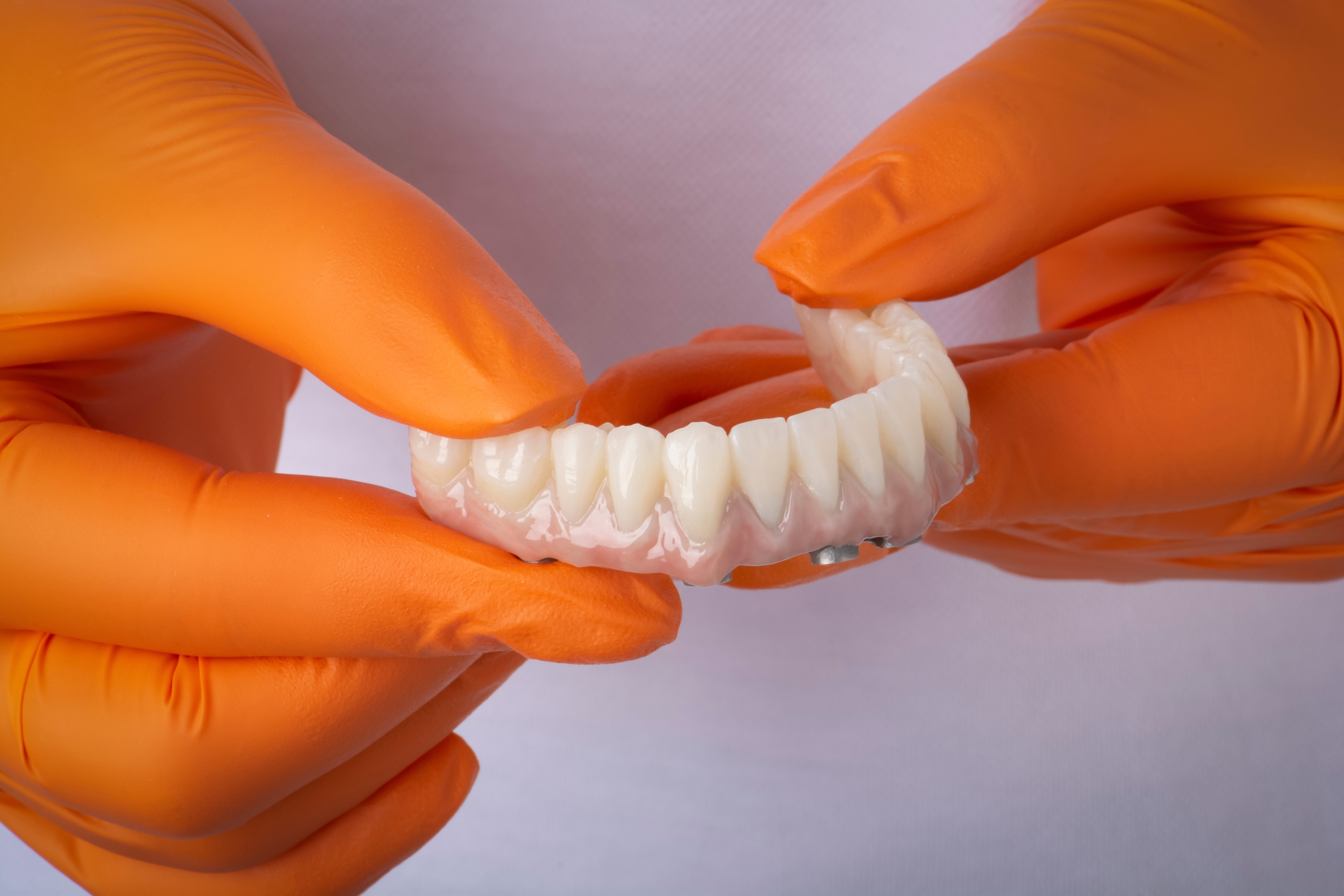
Broken or Lost Denture

Denture damage affects your ability to eat and speak — here’s how to respond.

Do not attempt to repair dentures with household glues — including super glue. These materials can be toxic and usually result in a poor fit that causes sore spots on your gums.

Denture repair kits are available at pharmacies for very minor chips as a temporary measure only. Call us,  we can often repair or reline a denture quickly.

Keep all pieces of the broken denture. Even badly broken dentures are often repairable.

Ill-fitting dentures that cause painful sores should be evaluated within 1–2 days. Continued wear can cause bone loss, gum sores, and oral infections.

In the meantime, use denture adhesive for a better fit, remove the denture for several hours a day to let gum tissue rest, and rinse with warm salt water to soothe sore areas.

Dental Trauma from Impact or Accident

Falls, sports injuries, car accidents, or physical trauma can affect multiple teeth and structures.

A loose but still-in-place tooth needs to be seen by us as soon as possible, ideally the same day. The tooth may need to be splinted to neighboring teeth to stabilize it during healing.

  • Eat only soft foods and avoid chewing with that tooth.
  • Rinse gently with warm salt water.
  • Take OTC pain relievers for discomfort.
  • Do not wiggle or touch the tooth.

Yes, always. Even when a tooth looks intact after trauma, there can be damage to the root, supporting bone, or dental pulp (nerve) that only shows up on X-ray. Delayed diagnosis can lead to tooth death, discoloration, and abscess weeks or months later.

We recommend a post-trauma evaluation within 24 hours even when symptoms seem mild. Please call us to schedule.

This is called luxation and it is a dental emergency, call us immediately. Do not try to push the tooth back yourself.

Keep your child calm, apply a cold pack to the outside of the face, have them bite gently on gauze if there’s bleeding, and get to our office as quickly as possible.

Permanent teeth that are significantly displaced need professional repositioning within hours for the best outcome.

Still Have Questions?

Our team is here to help, whether you need immediate emergency care or just have a question. Call us or send a message, and we’ll get back to you quickly.

Need Immediate Help?

Our team is ready for same-day dental emergencies. Don’t wait, call us now.

(805) 499-3691
Request Appointment

Emergency First Aid Tips

  • Stay calm and assess the situation
  • Rinse mouth with warm salt water
  • Apply ice pack for swelling (20 min on/off)
  • Use gauze to control bleeding
  • Never use aspirin directly on gum tissue
  • Save any broken tooth fragments

Office Hours

  • Mon, Tue, Thur:  8:00 AM – 5:00 PM
  • Wednesday:  8:00 AM – 12:00 PM
  • Sunday- Closed

After hours? Call our emergency line and leave a message or text message— we respond quickly.


,

The Effect of Coffee on Teeth

Coffee is one of the most popular beverages worldwide, cherished for its rich flavor and energizing effects. However, regular coffee drinkers may be concerned about its impact on oral health. From staining and enamel erosion to potential antibacterial benefits, coffee has a complex relationship with dental well-being. In this article, we’ll explore the effects of […]

,

Cosmetic Dentistry

Enhancing Your Smile with Modern Treatments A beautiful smile is often considered one of the most attractive features of a person. Thanks to advancements in dental technology, cosmetic dentistry has become more accessible than ever, allowing individuals to enhance their smiles and boost their self-confidence. Whether you’re looking to brighten your teeth, correct misalignments, or […]

,

How to Choose the Best Toothpaste for Your Dental Needs

When it comes to maintaining good oral health, choosing the right toothpaste is just as important as brushing technique. The market is flooded with a wide range of toothpaste options, each promising specific benefits. However, selecting the best one depends on your individual dental needs, such as cavity prevention, whitening, sensitivity relief, and gum health. […]

,

Teeth Whitening, Safe and Effective Ways to Brighten Your Smile

A radiant, white smile can boost your confidence and enhance your appearance. Over time, teeth may become discolored or stained due to factors such as aging, certain foods and beverages, tobacco use, and poor oral hygiene. Teeth whitening is a popular solution for restoring brightness and achieving a confident smile. Here are some safe and […]

,

How to Protect Your Teeth During the Holiday Season

Smart Dental Habits The holiday season is a time of joy, celebration, and indulgence. From sugary treats to festive drinks, the holidays often bring temptations that can take a toll on your dental health. While it’s important to enjoy the season, maintaining good oral hygiene is essential to keep your teeth healthy and strong. Here […]

,

The Effect of Food on Dental Problems

Oral health is deeply interconnected with diet and nutrition, as the foods and beverages we consume play a pivotal role in the development or prevention of dental problems. While brushing, flossing, and regular dental checkups are crucial, dietary choices significantly influence the overall health of our teeth and gums. Understanding how food impacts oral health […]

,

A Guide to Healthy Smiles During Adolescence

Teenage years are a time of growth, change, and new responsibilities—including maintaining good oral health. As teens become more independent, they may face unique dental challenges, from braces to wisdom teeth, as well as habits that can impact their oral hygiene. This article provides an in-depth guide to understanding and promoting oral health in teenagers. […]

,

Preventing Cavities in Kids’ Teeth: A Parent’s Guide

Cavities are one of the most common chronic conditions in children, but they are largely preventable with proper care and habits. Dental caries, or cavities, occur when bacteria in the mouth break down sugars and produce acid that erodes tooth enamel. This article provides parents with practical tips to protect their children’s teeth and prevent […]

,

The Importance of Fluoride for Kids’ Oral Health

Fluoride is a powerful tool for preventing cavities in children. This article explains the role of fluoride in strengthening enamel and how to use it safely. How Fluoride Protects Teeth Fluoride remineralizes enamel, reversing early decay. It reduces acid production from bacteria, preventing further damage. Safe Use of Fluoride Toothpaste Use a rice-grain-sized amount for […]